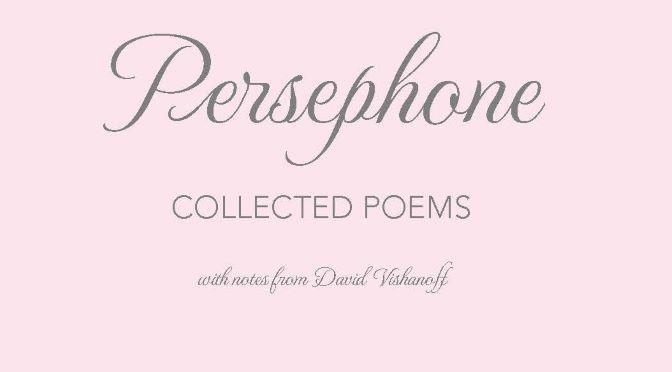
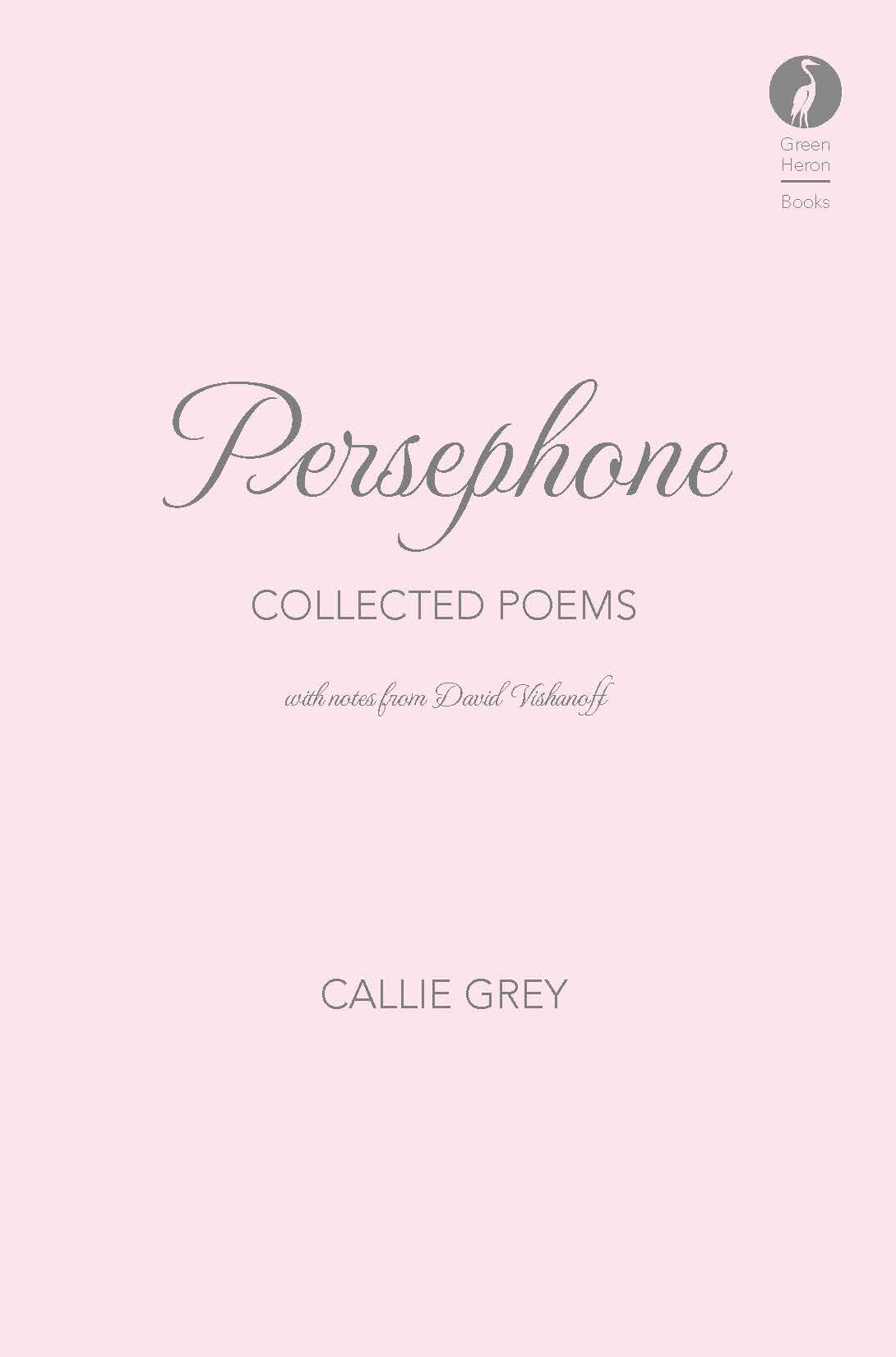
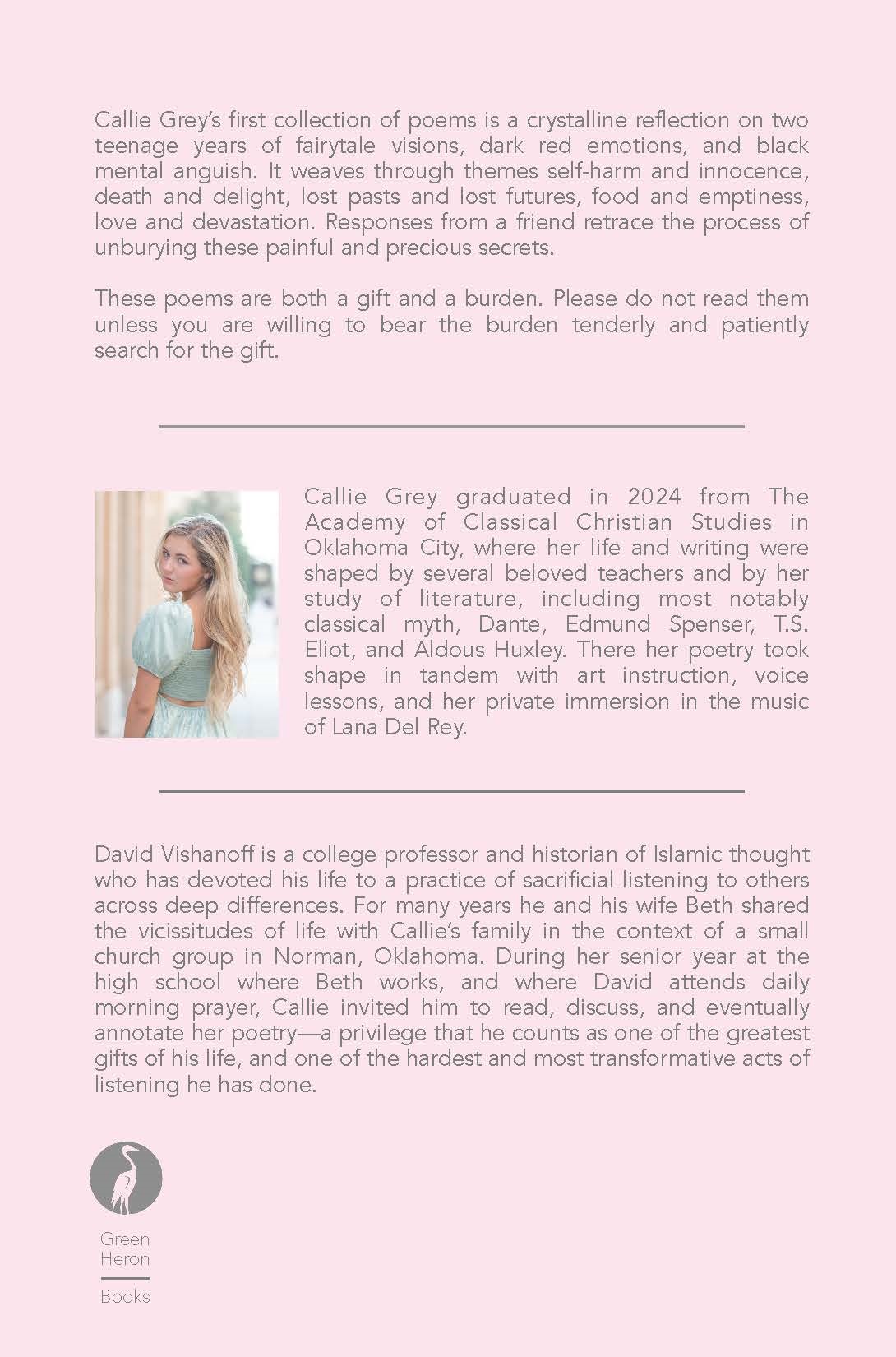
I am no poet, just a historian of Islamic thought, but last year a student at a local high school invited me to read, edit, and write responses to her poetry. The resulting collaboration has now been published:
Callie Grey. Persephone: Collected Poems with Notes from David Vishanoff. Green Heron, 2024.
It was a transformative experience, and one of the best and most difficult acts of sacrificial listening I have done.
The book is available from amazon.com as a nice and inexpensive hardback as well as a cheaply made paperback and a Kindle ebook.
Several translated selections from the Islamic Zabur that are of special interest for Christian-Muslim relations, and that are also available in the affordable Bloomsbury Reader in Christian-Muslim Relations, are now also included in the monumental new three-volume anthology Christian–Muslim Relations: Primary Sources, edited by David Thomas and available from Bloomsbury. My contribution is:
“Islamic Psalms of David.” In Christian–Muslim Relations: Primary Sources, Volume 1, 600–1500, ed. David Thomas, et al., 33–36. London: Bloomsbury, 2023.
It includes the following excerpts:
A rewriting of the Biblical Psalm 2 that alludes to a Qur’anic verse and seeks to preempt the Christian view that Psalm 2 asserts Jesus’s divine sonship.
A prediction of Muhammad and of the corruption of the Bible.
Another psalm that predicts Muhammad, alludes to the Qur’an’s echo of Psalm 37:29, criticizes Christian worship, and tells a story involving a dragon.
An assertion that Muslims do better than Christians at fulfilling Jesus’s Sermon on the Mount.
This essay is my first systematic published articulation of my theory of Sacrificial Listening. Many thanks to Mike Berhow and Greg Peterson of South Dakota State University for giving me a chance to sketch out some of my ideas there during a rich conversation in 2016, and for subsequently welcoming this more developed essay into their volume on the importance of intellectual virtues in a polarized society:
“An Epistemology for Listening Across Religious, Cultural, and Political Divides.” In Engaging Populism: Democracy and the Intellectual Virtues, ed. Gregory R. Peterson, Michael C. Berhow, and George Tsakiridis, 185–214. [London]: Palgrave Macmillan, 2022.
This essay stems from two decades of reflection on my scholarship and teaching in the field of Islamic studies. That thinking was first articulated somewhat autobiographically, with a focus on pedagogy, in a paper called “Sacrificial Listening: Christians, Muslims, and the Secular University.” It was fleshed out more systematically in a talk at the University of Oklahoma, “Sacrificial Listening: An Epistemology and Pedagogy for Intellectual Humility in the Humanities.” In this published chapter I attempt to sharpen its philosophical grounding, frame it in terms of intellectual virtues, and broaden its application to include the understanding of Others across political lines.
Islamic Legal Theory: A Critical Introduction Based on al-Juwayni’s Waraqat fi usul al‑fiqh. Indianapolis: Hackett, 2022.
This book is a revised and slightly expanded version of my Critical Introduction to Islamic Legal Theory, which was published online in 2017. Many thanks to Rick Todhunter at Hackett for suggesting that it be published as an affordable paperback for classroom use. It is available on Hackett’s web site as an ebook ($15.50), a paperback ($18), and in a library-style cloth binding (not sewn, $58). Instructors may order examination copies for a nominal charge of $3.
But the book isn’t just for students. Along with a critical edition and English translation of al-Juwayni’s widely used Kitab al-Waraqat fi usul al-fiqh, it offers a novel commentary that highlights the significance of classical debates for contemporary concerns in a way that I hope will prove illuminating for specialists.
Several translated selections from the Islamic Zabur that are of special interest for Christian-Muslim relations are now available in an affordable sourcebook suitable for use in teaching: The Bloomsbury Reader in Christian-Muslim Relations, 600-1500, edited by David Thomas and available from Bloomsbury. My contribution is:
David R. Vishanoff. “Islamic Psalms of David.” In The Bloomsbury Reader in Christian-Muslim Relations, 600-1500, ed. David Thomas, 30–33. London: Bloomsbury, 2022.
It includes the following excerpts:
A rewriting of the Biblical Psalm 2 that alludes to a Qur’anic verse and seeks to preempt the Christian view that Psalm 2 asserts Jesus’s divine sonship.
A prediction of Muhammad and of the corruption of the Bible.
Another psalm that predicts Muhammad, alludes to the Qur’an’s echo of Psalm 37:29, criticizes Christian worship, and tells a story involving a dragon.
An assertion that Muslims do better than Christians at fulfilling Jesus’s Sermon on the Mount.